


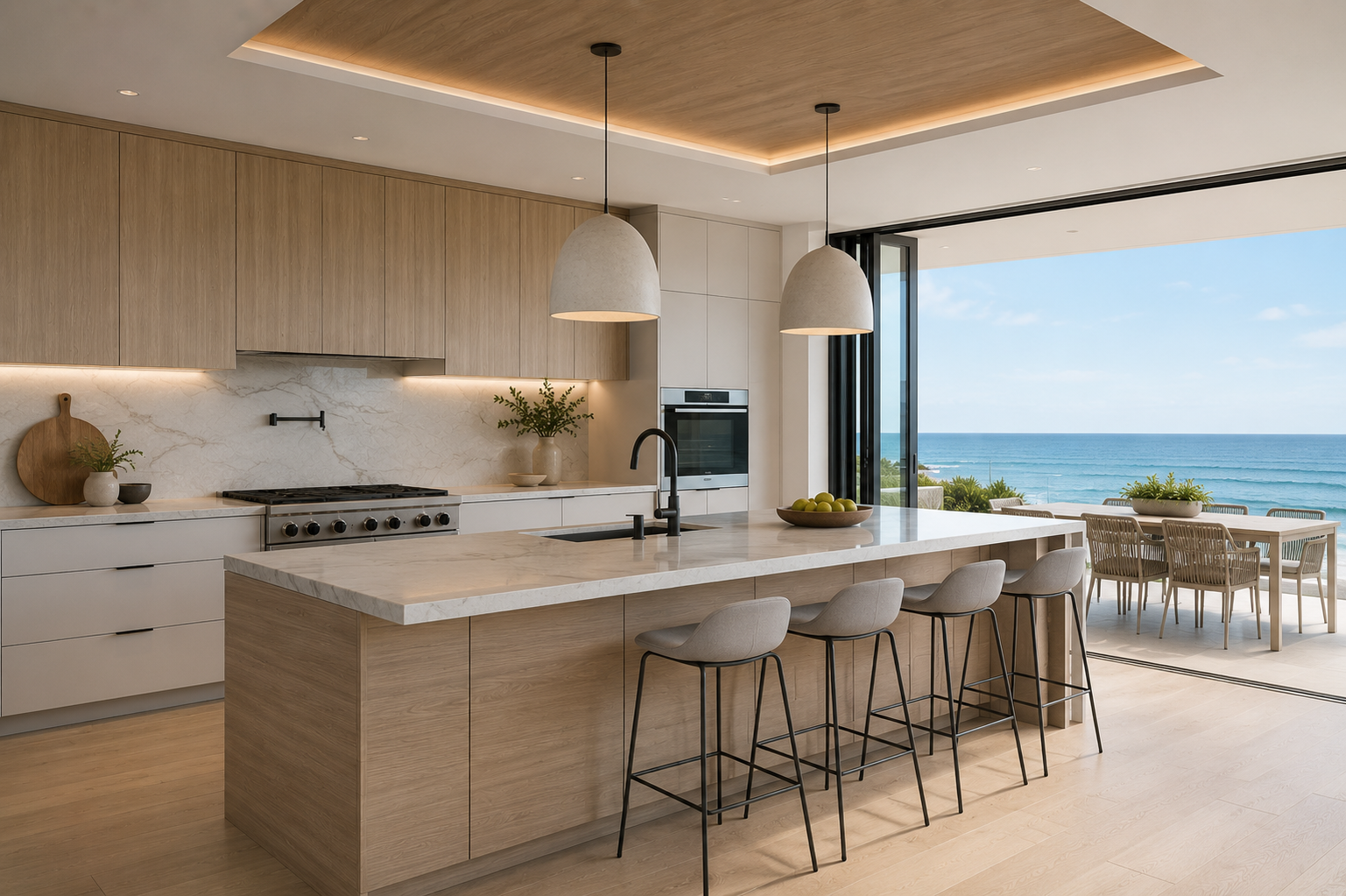
Why Traditional Wood Cabinets Fail in Coastal Areas
Coastal aluminum cabinet systems are becoming an increasingly important solution for modern beachfront homes and high-humidity environments.
Many homeowners believe traditional wood cabinets are suitable for all environments. However, in coastal areas, high humidity, salt air, and constant moisture exposure can quickly damage conventional cabinet materials.
From beachfront villas to tropical resorts, cabinet swelling, peeling, mold, and corrosion are common long-term problems in coastal projects.
As modern coastal architecture continues to evolve, more architects, builders, and property developers are now exploring aluminum-based cabinet systems for better durability and lower maintenance requirements.
What Causes Cabinets to Fail Near the Ocean?
Coastal environments are significantly more challenging than inland climates. Constant exposure to humidity, salt-heavy air, and temperature fluctuations creates long-term stress on traditional cabinet materials.
In many beachfront homes and coastal villas, moisture can slowly penetrate wood-based cabinets over time. Once moisture enters the material, swelling, deformation, peeling, and mold growth often begin to appear.
At the same time, salt particles carried by ocean air can accelerate corrosion on metal hardware, hinges, screws, and other cabinet components.
This combination of moisture and salt exposure is one of the main reasons why conventional wood cabinets often experience a much shorter lifespan in coastal environments.
Common Problems With Traditional Wood Cabinets in Coastal Homes
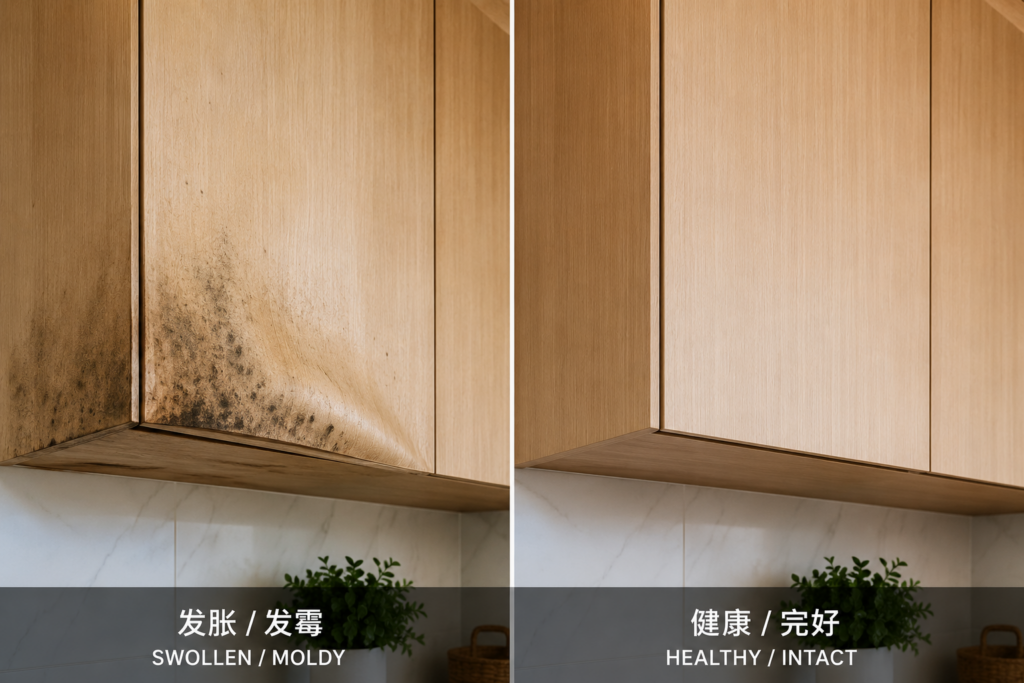
Cabinet Swelling
Wood naturally absorbs moisture from the surrounding air. In humid coastal regions, cabinet panels may gradually expand, deform, or lose dimensional stability.
Surface Peeling and Delamination
Many laminated wood cabinets eventually develop peeling surfaces or separated layers due to continuous humidity exposure.
Mold and Mildew
Moisture trapped inside cabinet structures can create an ideal environment for mold and mildew growth, especially in kitchens, bathrooms, and laundry areas.
Rusted Hardware
Salt-heavy coastal air can accelerate rust and corrosion on hinges, screws, drawer slides, and other cabinet accessories.
Increased Maintenance Costs
Traditional cabinets in beachfront properties often require frequent repairs, repainting, or even full replacement after several years of use.
Why Aluminum Cabinet Systems Perform Better in Coastal Environments
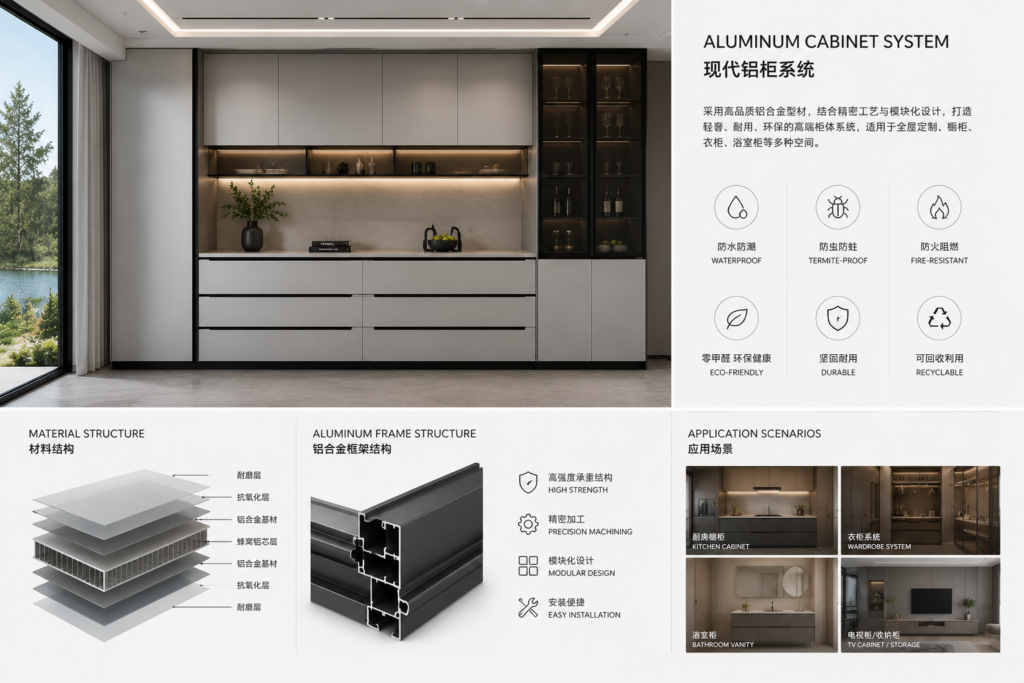
Compared with traditional wood materials, aluminum cabinet systems offer significantly better resistance to humidity, corrosion, and long-term environmental exposure.
Because aluminum does not absorb moisture, it maintains structural stability even in high-humidity coastal environments. This makes it especially suitable for beachfront villas, tropical residences, outdoor kitchens, and coastal resort projects.
Modern aluminum cabinet systems also provide several additional advantages:
- Waterproof performance
- Corrosion resistance
- Lightweight structure
- Long-term dimensional stability
- Low maintenance requirements
- Better durability in humid climates
As a result, more designers and developers are beginning to adopt aluminum-based cabinet solutions for modern coastal projects.
Why Aluminum Honeycomb Panels Are Becoming Popular in Coastal Cabinet Systems
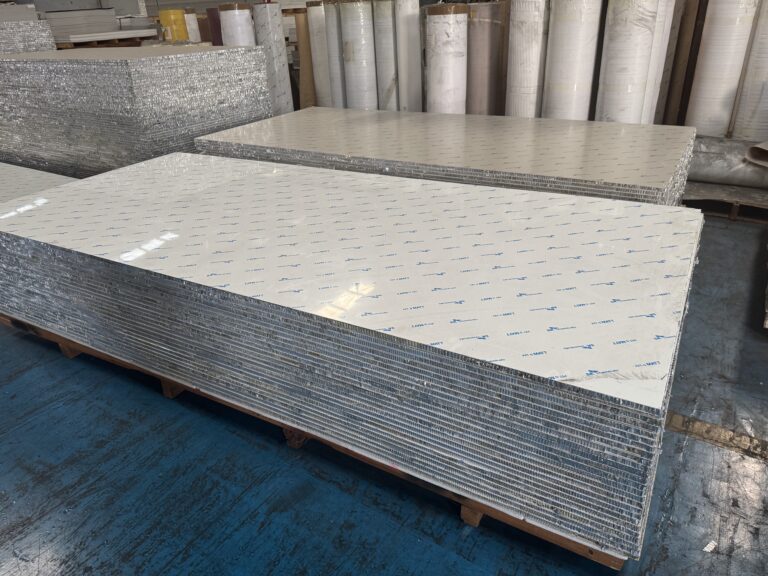
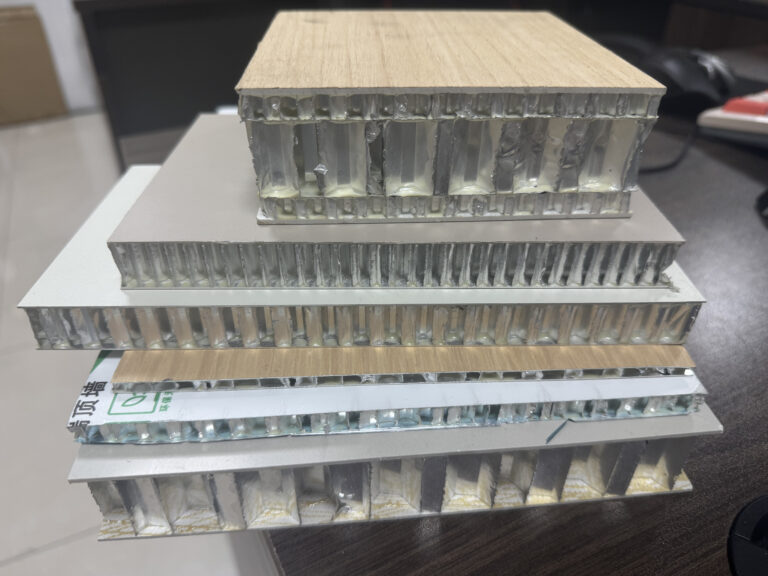
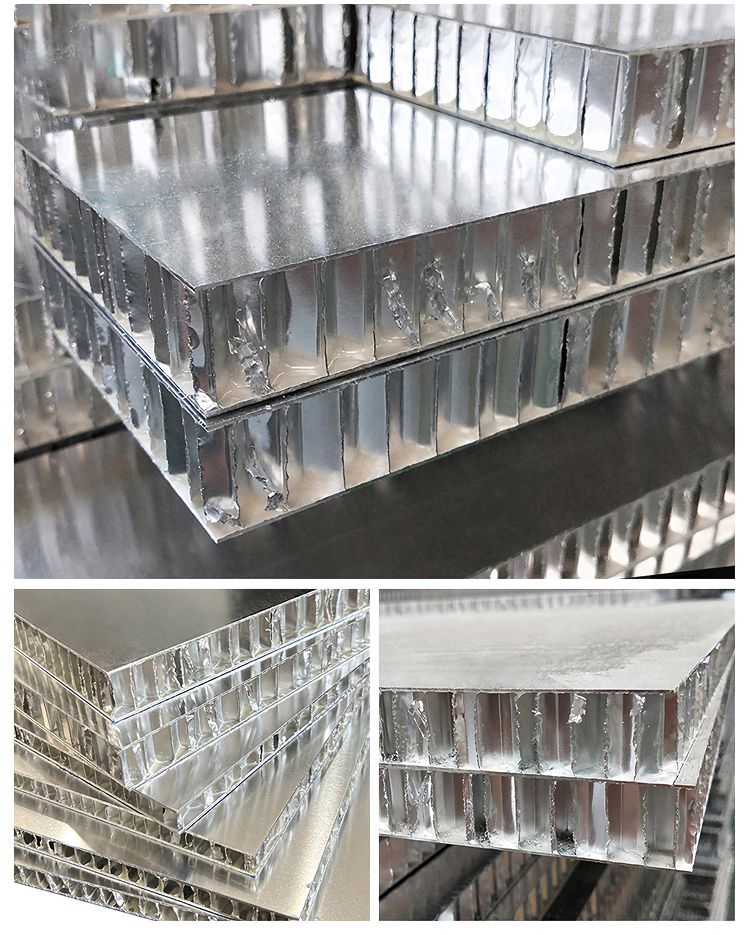
In recent years, aluminum honeycomb panels have become increasingly popular in coastal cabinet and furniture applications.
Due to their lightweight internal structure and high flatness, aluminum honeycomb panels provide excellent stability while remaining highly resistant to moisture and environmental stress.
These materials are now widely used in:
- Beachfront villas
- Coastal luxury homes
- Tropical island projects
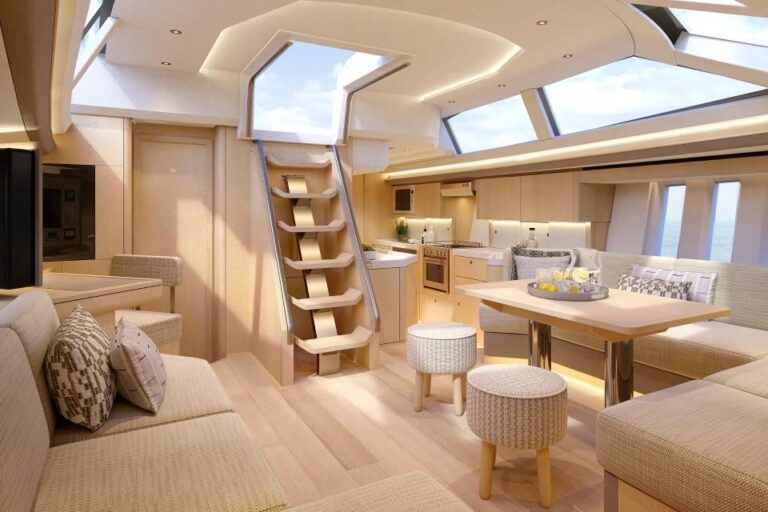
- Yacht interiors
- Outdoor kitchens
- Coastal resort developments
For projects located near the ocean, aluminum honeycomb cabinet systems can help reduce long-term maintenance problems while improving durability and overall project lifespan.
Coastal Cabinet Design Trends in Modern Architecture
Modern coastal architecture is increasingly focused on durability, sustainability, and low-maintenance materials.
Architects and designers are now paying closer attention to how cabinet systems perform under real environmental conditions rather than focusing only on appearance.
As a result, aluminum-based cabinet systems are becoming a practical solution for many high-humidity and salt-heavy coastal environments.
This trend is especially visible in luxury beachfront villas, modern resorts, marine projects, and tropical residential developments where long-term performance is critical.
Conclusion
For coastal projects, selecting the right cabinet material is about much more than appearance alone.
Humidity, salt air, and constant moisture exposure can quickly shorten the lifespan of traditional wood cabinet systems and increase long-term maintenance costs.
As modern coastal construction standards continue to evolve, aluminum cabinet systems are becoming an increasingly reliable solution for beachfront properties and high-humidity environments.
With excellent moisture resistance, corrosion resistance, and long-term durability, aluminum honeycomb cabinet systems are now widely considered one of the most practical choices for modern coastal living.
FAQ
Why do wood cabinets fail in coastal areas?
Wood cabinets can absorb moisture from humid coastal air, which may lead to swelling, peeling, mold growth, and structural deformation over time.
Are aluminum cabinets better for beachfront homes?
Yes. Aluminum cabinets offer strong moisture resistance, corrosion resistance, and long-term durability, making them highly suitable for coastal environments.
What is the best cabinet material for coastal homes?
Many modern coastal projects now prefer aluminum-based cabinet systems because they perform better in high-humidity and salt-heavy environments.
Do aluminum honeycomb panels rust?
Aluminum honeycomb panels are highly corrosion-resistant and perform much better than many traditional materials in coastal conditions.
Are aluminum cabinets suitable for outdoor kitchens?
Yes. Aluminum cabinet systems are commonly used in outdoor kitchens due to their waterproof and corrosion-resistant properties.