


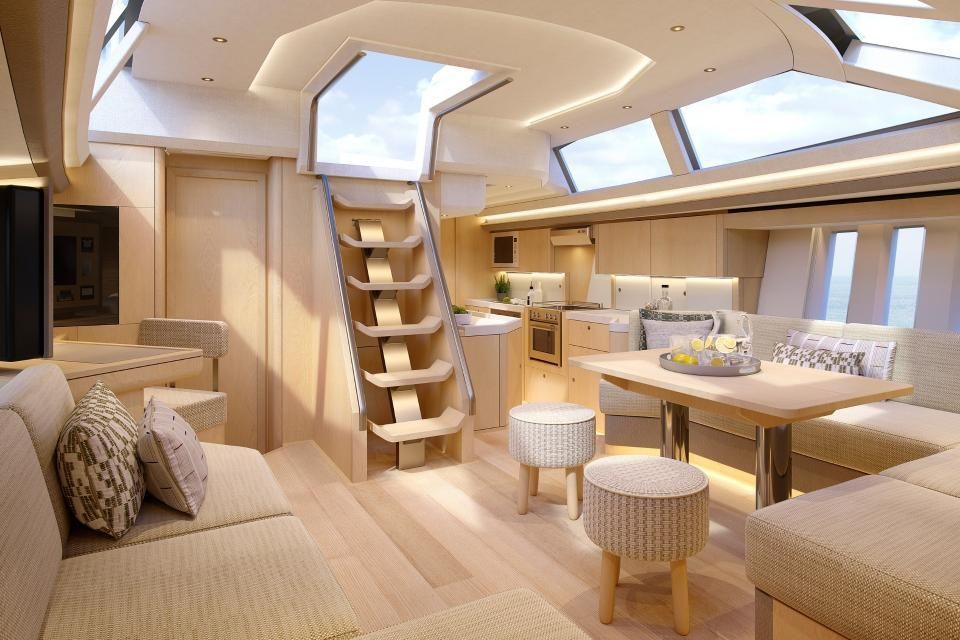
Aluminum Honeycomb Panels for Cruise Ship Interiors: Lightweight Solutions for Walls, Ceilings, Floors & Furniture Modern cruise ship interiors require materials that combi
Modern cruise ship interiors require materials that combine low weight, structural rigidity, dimensional stability, and design flexibility. From passenger cabins and corridors to restaurants, lounges, and public spaces, reducing unnecessary interior weight can be an important consideration during both new vessel construction and refurbishment projects.
One material increasingly considered for lightweight marine interior construction is the aluminum honeycomb panel.
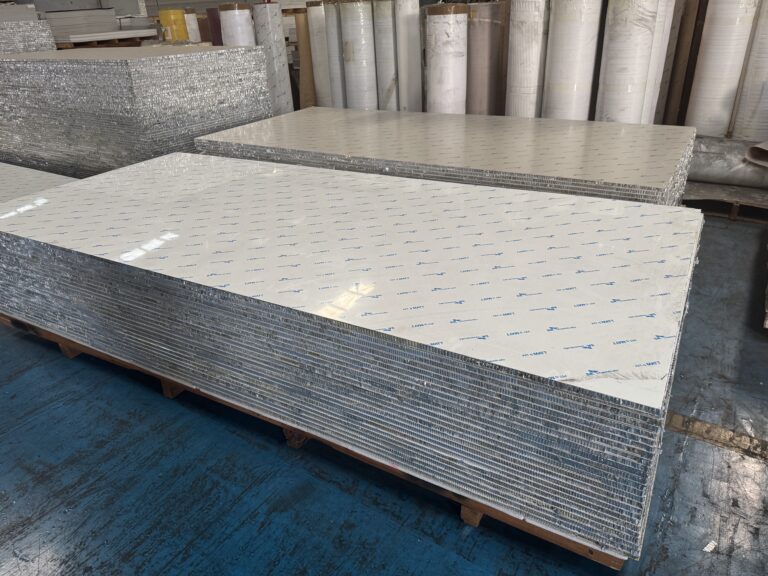
With a sandwich structure consisting of aluminum face sheets bonded to an aluminum honeycomb core, these panels provide a high stiffness-to-weight ratio and can be manufactured in different thicknesses, sizes, and surface finishes for a wide range of interior applications.
In this article, we look at how aluminum honeycomb panels for cruise ship interiors can be used for walls, ceilings, partitions, flooring structures, furniture, and other lightweight marine interior components.
What Is an Aluminum Honeycomb Panel?
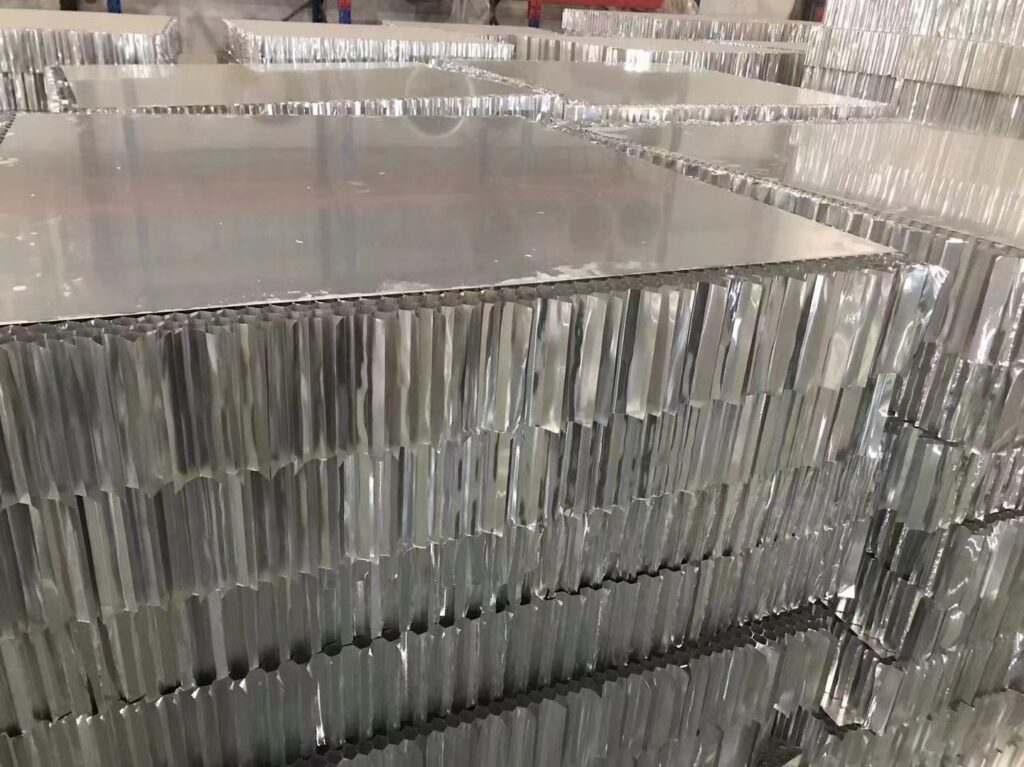
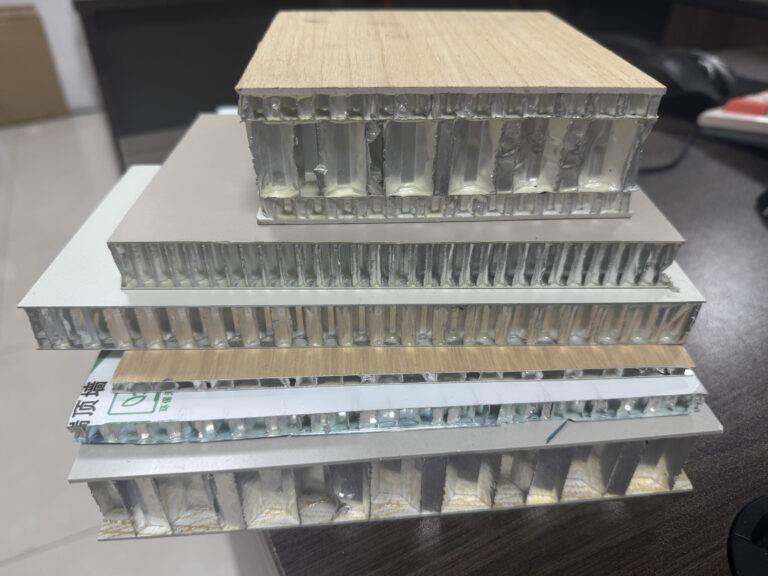
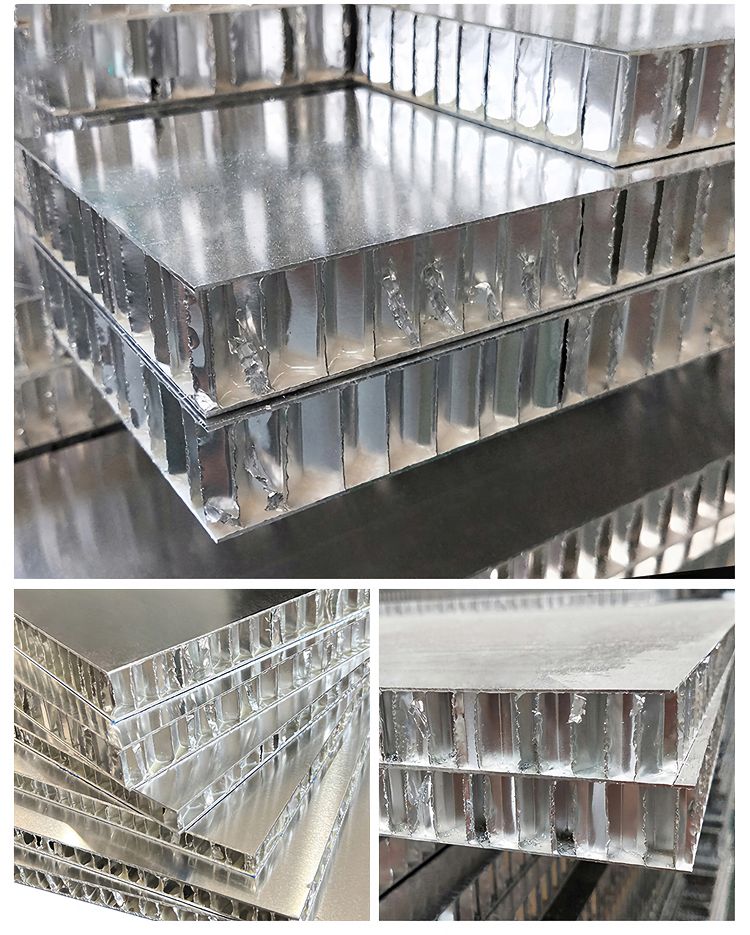
An aluminum honeycomb panel is a lightweight sandwich panel typically composed of three main layers:
- Aluminum top face sheet
- Aluminum honeycomb core
- Aluminum bottom face sheet
The hexagonal honeycomb core separates and supports the two face sheets. This sandwich construction allows the finished panel to achieve good rigidity and flatness while keeping overall material weight relatively low.
Depending on the application, aluminum honeycomb panels can be supplied as bare aluminum panels or combined with decorative surfaces and other finishing materials.
Why Lightweight Panels Matter in Cruise Ship Interiors
A cruise ship contains a large amount of interior material. Cabins, corridors, restaurants, bars, lounges, ceilings, partitions, doors, furniture, and other interior components can collectively contribute substantial weight to the vessel.
For this reason, shipyards, marine interior contractors, ship outfitters, and refurbishment companies often evaluate lightweight materials when designing or renovating vessel interiors.
Aluminum honeycomb sandwich construction offers several characteristics that can make it suitable for these applications.
1. High Stiffness-to-Weight Ratio
The honeycomb sandwich structure provides rigidity without requiring a thick solid aluminum plate.
This makes it possible to manufacture relatively large and lightweight panels while maintaining good dimensional stability and flatness.
2. Weight Reduction
Compared with many solid boards or heavier interior substrates, an aluminum honeycomb structure can reduce panel weight while still providing the rigidity required for many interior applications.
When lightweight panels are used across multiple areas of a cruise ship, the accumulated weight reduction can become significant.
3. Good Panel Flatness
Large interior surfaces such as wall linings, decorative partitions, and ceiling panels require good flatness.
The sandwich structure of an aluminum honeycomb panel helps maintain a stable and flat surface, making it suitable as a substrate for many decorative marine interior systems.
4. Corrosion-Resistant Aluminum Construction
Aluminum is widely used in transportation and marine-related applications because of its relatively low density and corrosion resistance.
For marine environments, appropriate alloy selection, surface treatment, adhesives, edge sealing, and installation details should still be considered according to the specific project.
5. Flexible Surface Finishes
Cruise ship interiors require more than structural performance. Interior designers may also require different colors, textures, and decorative effects.
Depending on project requirements, aluminum honeycomb substrates can be combined with suitable decorative systems such as:
- HPL decorative laminates
- Painted or coated aluminum
- Stainless steel surfaces
- Decorative metal finishes
- Suitable decorative films or laminates
- Stone or other lightweight decorative composite systems
The suitability of each finish should be evaluated according to the intended installation area and applicable marine requirements.
Where Are Aluminum Honeycomb Panels Used in Cruise Ship Interiors?
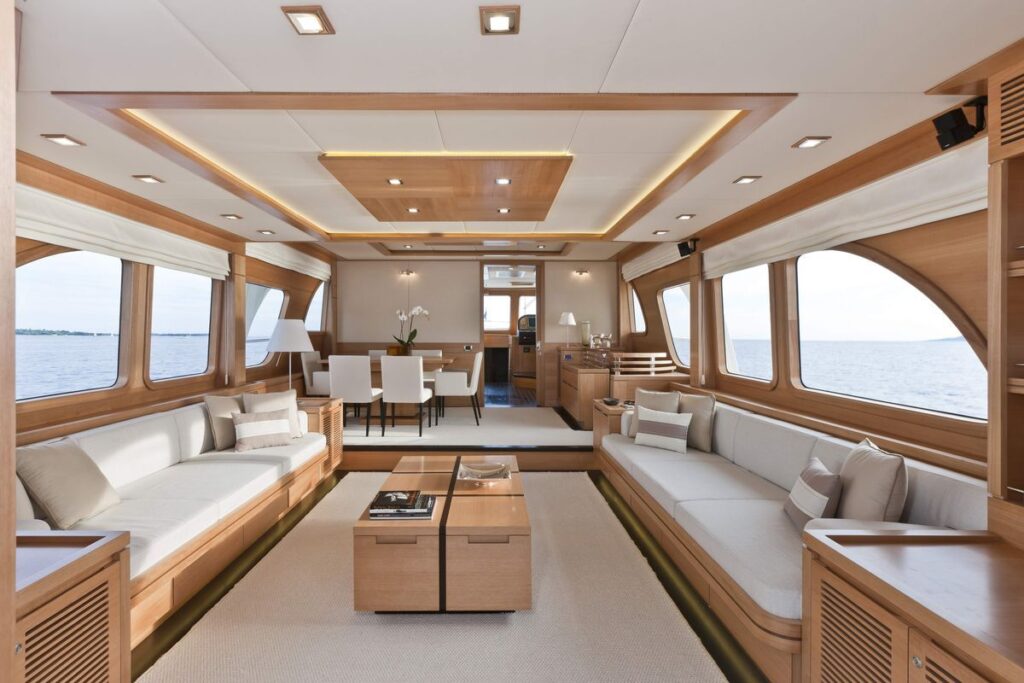
Aluminum honeycomb panels can be considered for several types of non-structural interior components.
The exact panel construction should always be selected according to the mechanical, fire, acoustic, surface, and certification requirements of the project.
1. Cruise Ship Interior Wall Panels
Interior walls and wall linings are one of the main areas where lightweight sandwich panels can be considered.
Potential applications include:
- Passenger cabin wall linings
- Corridor wall panels
- Restaurant and lounge wall panels
- Decorative feature walls
- Service-area wall linings
- Non-structural interior partitions
Because cruise ships contain large quantities of interior wall surfaces, reducing the weight of individual panels can contribute to overall interior weight optimization.
2. Marine Bulkheads and Interior Partitions
In marine terminology, interior dividing structures are often referred to as bulkheads or partitions.
Lightweight honeycomb construction may be used in suitable non-load-bearing interior division systems when the complete construction meets the requirements applicable to that location.
For cruise ship projects, it is important to distinguish between ordinary decorative partitions and fire-rated divisions. A panel intended for a specific fire-rated application must use an appropriate tested and approved system rather than relying only on the properties of the aluminum honeycomb core.
3. Cruise Ship Ceiling and Deckhead Panels
In shipbuilding and marine interiors, ceilings may also be referred to as deckheads.
Lightweight aluminum honeycomb panels can be considered as substrates or components in suitable marine ceiling systems because they provide:
- Low weight
- Good flatness
- Dimensional stability
- Fabrication flexibility
- Multiple finishing options
Potential applications include passenger cabins, corridors, lounges, restaurants, and other public or service spaces, subject to the requirements of the complete ceiling system.
4. Cruise Ship Flooring
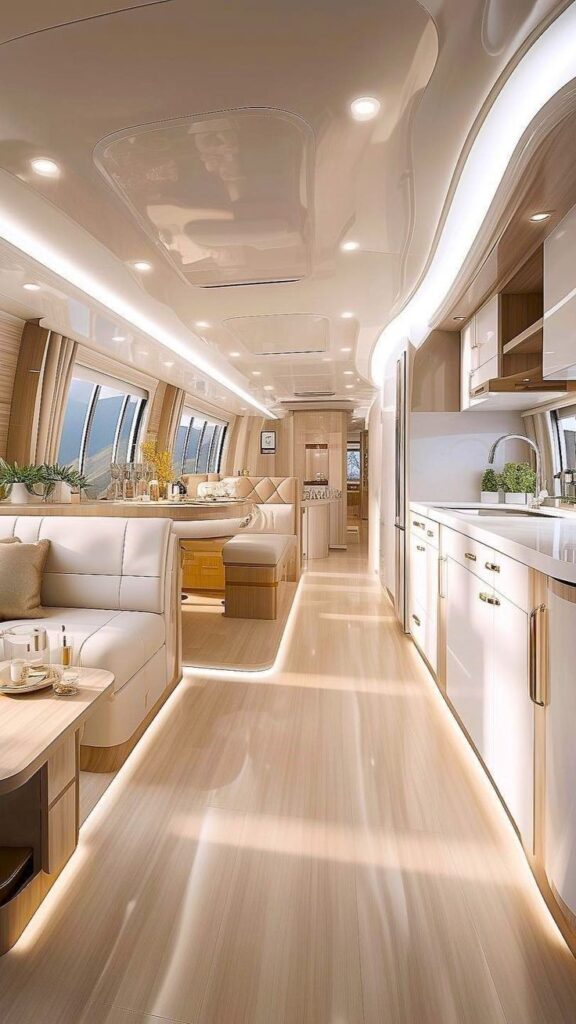
Flooring is another application where lightweight sandwich panel construction can be useful.
A honeycomb floor panel can provide a rigid base while reducing weight compared with some conventional solid substrates.
Potential applications include:
- Raised floor systems
- Interior floor substrates
- Modular floor assemblies
- Technical access floors
- Selected cabin and public-area flooring systems
Floor panels should be engineered according to the required span, concentrated load, distributed load, impact resistance, support structure, and finishing system.
Panel thickness and aluminum skin thickness should therefore be selected according to the actual application rather than using one specification for every flooring project.
5. Lightweight Marine Furniture
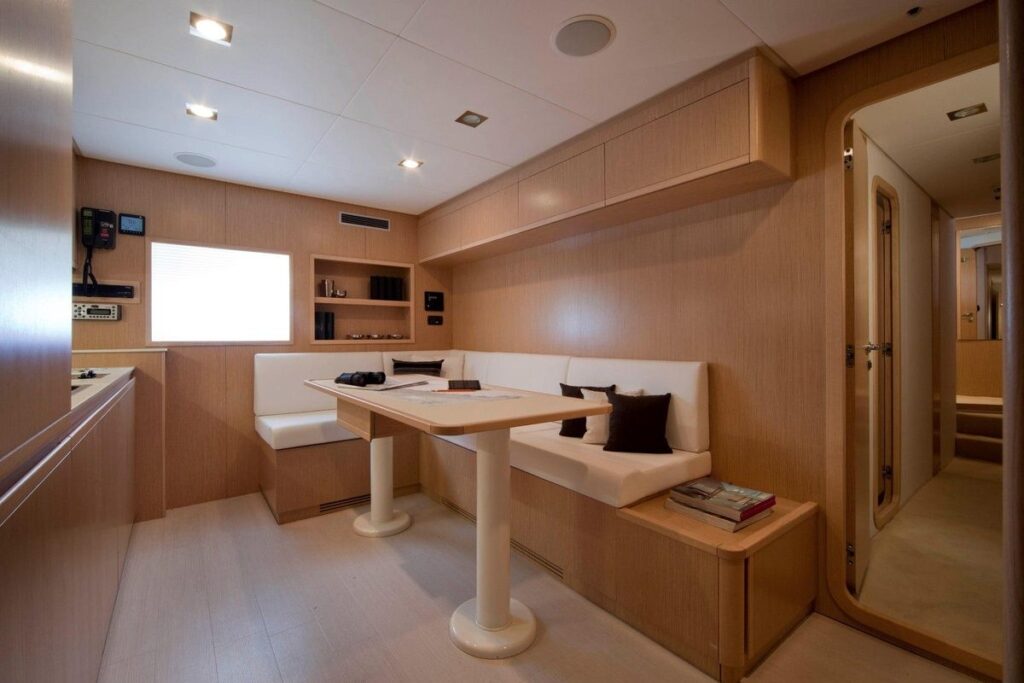
Furniture is another area where weight can be reduced.
Aluminum honeycomb panels can be processed into lightweight furniture components such as:
- Cabinets
- Wardrobes
- Shelves
- Tables
- Desks
- Doors
- Storage units
- Counter and work surfaces
Instead of using a heavy solid board throughout the furniture structure, a honeycomb sandwich panel provides a lightweight core with rigid outer skins.
Edges, hinges, screws, and other hardware attachment points can be reinforced locally with suitable inserts or profiles according to the furniture design.
6. Countertops and Decorative Surfaces
Cruise ships contain restaurants, bars, buffets, bathrooms, reception areas, and other spaces where stone or stone-look surfaces may be required.
Aluminum honeycomb structures can also be used as lightweight backing or support materials in suitable decorative composite systems.
For natural stone and engineered stone applications, the panel construction should be engineered according to the stone thickness, dimensions, bonding system, edge design, and required mechanical performance.
Aluminum Honeycomb Panels for Cruise Ship Refurbishment
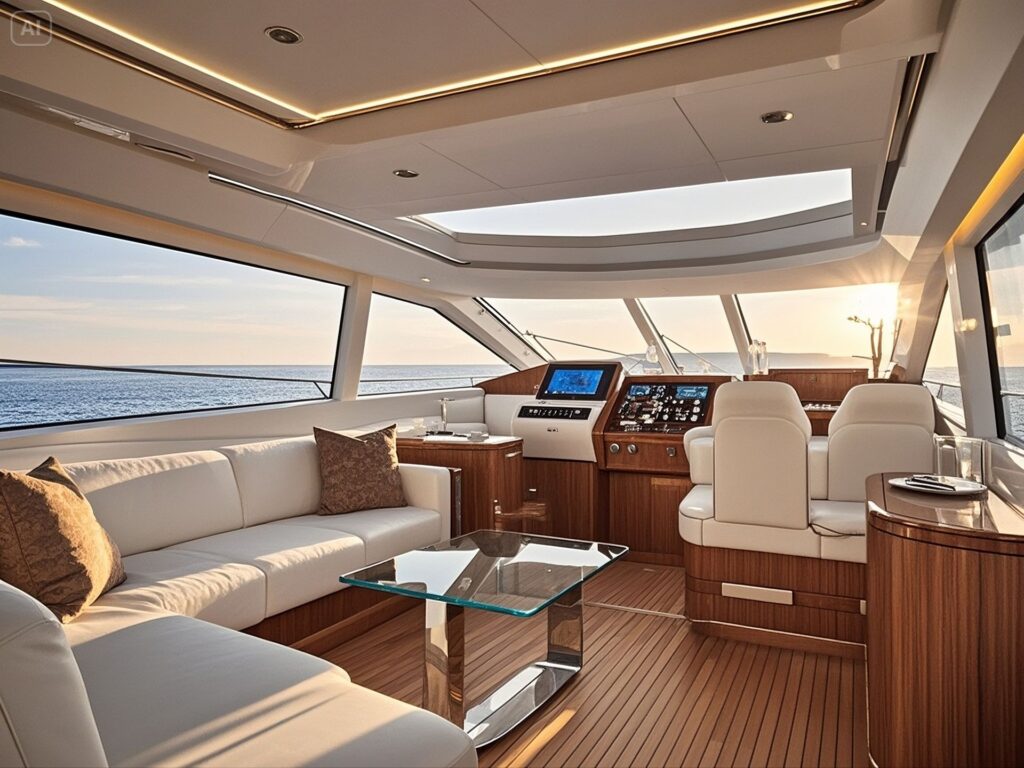
Aluminum honeycomb panels are relevant not only to new ship construction but also to cruise ship refurbishment and interior retrofit projects.
Cruise vessels periodically undergo interior renovation. Cabins, restaurants, lounges, retail areas, bars, and public spaces may be redesigned or replaced while much of the vessel structure remains in service.
For refurbishment contractors, lightweight materials can be useful where designers want to modernize interior spaces without introducing unnecessary additional weight.
Honeycomb panels can be fabricated into custom dimensions and components for:
- Replacement wall panels
- New decorative partitions
- Ceiling systems
- Lightweight furniture
- Counters and tables
- Flooring substrates
- Custom interior modules
This also makes cruise ship refurbishment companies and marine interior contractors potential customers for aluminum honeycomb panel manufacturers.
Aluminum Honeycomb Panels vs Plywood for Marine Interiors
Marine plywood has traditionally been used for many marine interior applications, but aluminum honeycomb panels provide a different combination of properties.
Weight
Aluminum Honeycomb Panel: Designed for lightweight sandwich construction.
Plywood: Weight depends on wood species, density, and thickness.
Moisture
Aluminum Honeycomb Panel: Aluminum components do not absorb water.
Plywood: Requires appropriate marine-grade material and protection against moisture.
Flatness
Aluminum Honeycomb Panel: Sandwich construction can provide good panel flatness.
Plywood: Dimensional stability can be affected by material grade, moisture, and storage conditions.
Large Panel Sizes
Aluminum Honeycomb Panel: Large customized panels can be manufactured for project requirements.
Plywood: Available dimensions are generally determined by standard sheet formats.
Hardware Installation
Aluminum Honeycomb Panel: Concentrated fixing points may require inserts or reinforced edges.
Plywood: Conventional woodworking fixings are commonly used.
Neither material is automatically the correct solution for every marine application. Selection depends on project requirements including weight, cost, mechanical performance, fabrication method, certification, and installation system.
Typical Aluminum Honeycomb Panel Sizes for Marine Projects
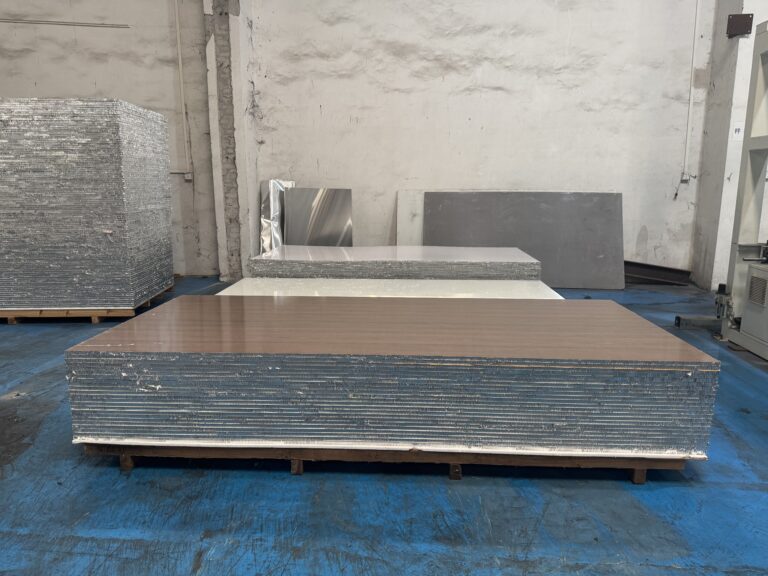
For general aluminum honeycomb panel production, 1220 × 2440 mm is one of the most commonly used standard sheet sizes.
Meiren Aluminum also supplies commonly requested sizes including:
- 1220 × 2600 mm
- 1220 × 2750 mm
- 1220 × 2800 mm
- 1220 × 3000 mm
- 1220 × 3200 mm
For project-based production, customized dimensions are available.
Depending on panel construction and manufacturing requirements, panel width can be customized up to approximately 1500 mm.
For suitable specifications and project quantities, long aluminum honeycomb panels can also be manufactured according to customer requirements, with lengths potentially reaching approximately 6–9 meters.
Final manufacturing feasibility should be confirmed according to panel thickness, face-sheet thickness, surface finish, quantity, and transportation requirements.
How to Choose Aluminum Honeycomb Panels for Cruise Ship Interiors
There is no single aluminum honeycomb panel specification suitable for every part of a cruise ship.
Before selecting a panel, buyers, contractors, and project engineers should consider several factors.
Panel Thickness
Thicker panels generally provide greater sandwich stiffness, but the required thickness depends on panel dimensions, support spacing, and expected loads.
Aluminum Face-Sheet Thickness
The thickness of the aluminum skins influences panel weight, surface durability, impact resistance, and mechanical performance.
Honeycomb Core Specification
Honeycomb cell size, aluminum foil thickness, density, and overall core thickness can be adjusted according to the required performance.
Surface Finish
The final surface should be selected according to the interior design, cleaning requirements, fabrication process, and applicable marine regulations.
Edge and Hardware Reinforcement
Furniture, doors, removable panels, and other components often require screws, hinges, locks, or other hardware.
Because the interior of a honeycomb panel consists of hollow cells, concentrated fixing points should be designed carefully.
Aluminum profiles, solid inserts, or other reinforcement methods can be incorporated into selected areas according to the final application.
Fire and Marine Certification Requirements
This is particularly important for passenger vessels.
The aluminum honeycomb core and the complete finished panel should not be treated as the same thing when evaluating fire performance.
Adhesives, decorative surfaces, coatings, laminates, and the complete sandwich construction can affect the fire performance of the finished panel.
For projects requiring IMO, MED, classification-society, or other marine approvals, the purchaser should define the required standard and installation area before ordering. The exact panel construction and certification documentation should then be evaluated against those project requirements.
Who Uses Aluminum Honeycomb Panels in the Cruise Ship Industry?
Potential customers and users of aluminum honeycomb panels in the cruise and passenger-vessel supply chain include:
- Shipyards
- Cruise ship builders
- Marine interior contractors
- Ship interior outfitters
- Cruise ship refurbishment companies
- Marine furniture manufacturers
- Modular cabin manufacturers
- Marine composite panel fabricators
- Architectural and interior contractors working on vessel projects
Depending on the customer, aluminum honeycomb panels may be purchased as full sheets for further processing or manufactured according to project-specific dimensions.
Custom Aluminum Honeycomb Panels from Meiren Aluminum
Meiren Aluminum manufactures aluminum honeycomb cores and aluminum honeycomb panels for lightweight sandwich construction.
For cruise ship, yacht, and marine interior projects, panel specifications can be discussed according to the intended application, including:
- Panel length and width
- Overall panel thickness
- Aluminum face-sheet thickness
- Honeycomb core specification
- Surface requirements
- Edge treatment
- Cut-to-size requirements
- Project quantity
Whether the project involves cruise ship walls, ceilings, flooring, furniture, or other lightweight interior components, selecting the correct sandwich construction is important for achieving the required balance between weight, rigidity, durability, and fabrication performance.
Frequently Asked Questions About Aluminum Honeycomb Panels for Cruise Ships
Can aluminum honeycomb panels be used in cruise ship interiors?
Yes. Aluminum honeycomb sandwich panels can be used in suitable marine interior applications such as wall linings, partitions, ceilings, cabinetry, furniture, and selected flooring systems.
The exact panel construction should be selected according to the requirements of the installation area.
Are aluminum honeycomb panels suitable for marine furniture?
Yes. Their high stiffness-to-weight ratio makes them suitable for lightweight cabinets, wardrobes, tables, doors, shelves, and other furniture components.
Hardware attachment areas may require inserts or reinforced edges.
Can aluminum honeycomb panels be used for cruise ship floors?
They can be used as part of suitable lightweight flooring systems.
Floor applications should be engineered according to panel span, loads, impact requirements, support structure, and final floor finish.
Can aluminum honeycomb panels replace plywood in ship interiors?
In some applications, aluminum honeycomb panels can provide an alternative to plywood, particularly where weight reduction, moisture resistance, and dimensional stability are important.
However, material selection should be based on the mechanical, fire, fabrication, certification, and cost requirements of the individual project.
Are aluminum honeycomb panels fireproof?
Aluminum and aluminum honeycomb core are non-combustible materials, but this does not automatically mean that every finished aluminum honeycomb sandwich panel meets the fire requirements for a cruise ship.
The complete construction—including adhesives, coatings, decorative laminates, and other materials—must be considered.
For regulated marine applications, the required certification should be confirmed for the exact panel system.
Can cruise ship honeycomb panels be customized?
Yes. Panel dimensions, overall thickness, aluminum skin thickness, honeycomb core specification, and certain surface or fabrication requirements can be customized according to the project.
Conclusion
Weight reduction is an important consideration in modern cruise ship interior design, especially when large quantities of wall panels, ceilings, partitions, flooring, and furniture are installed throughout a vessel.
Aluminum honeycomb panels for cruise ship interiors provide a lightweight sandwich construction with good rigidity, flatness, and customization potential.
They can be considered for a wide range of marine interior applications, from cabin furniture and wall linings to ceiling systems, partitions, and selected flooring structures.
However, cruise ship projects can also have specific fire, safety, and certification requirements. Panel construction should therefore be selected according to the actual installation location and project specification.
If you are developing a cruise ship, passenger vessel, yacht, or marine refurbishment project, contact Meiren Aluminum with your required panel dimensions, thickness, face-sheet specification, surface requirements, and estimated quantity. We can discuss a suitable aluminum honeycomb panel configuration for your application.