



Aluminum Honeycomb Panel vs Aluminum Composite Panel (ACP): What’s the Difference?
When selecting aluminum panels for architectural, transportation, furniture, or industrial projects, two materials are often considered: aluminum honeycomb panels and aluminum composite panels (ACP).
Although both materials use aluminum as part of their structure, they are very different in terms of core construction, rigidity, weight, thickness, durability, and suitable applications.
Understanding these differences can help architects, contractors, manufacturers, and project buyers choose the right panel for their specific requirements.
What Is an Aluminum Honeycomb Panel?

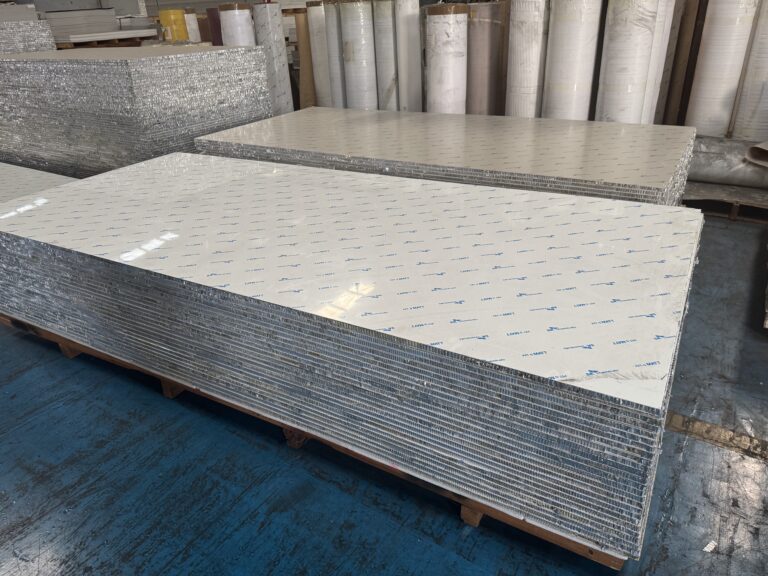
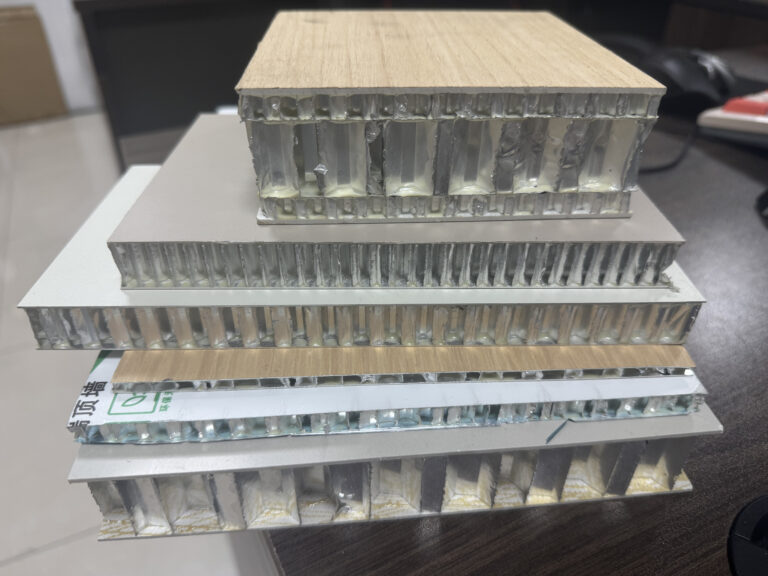
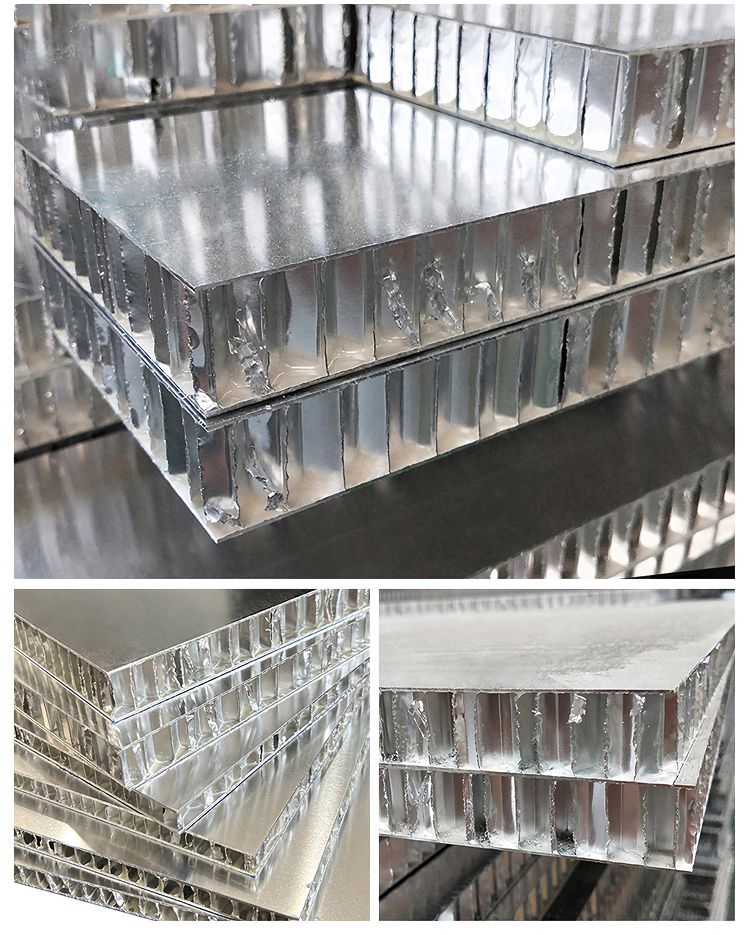
An aluminum honeycomb panel is a lightweight sandwich panel consisting of two surface sheets bonded to an aluminum honeycomb core.
The internal core contains hexagonal cells arranged in a honeycomb structure. This construction provides excellent rigidity while keeping the overall panel relatively lightweight.
A typical aluminum honeycomb panel consists of:
- Top aluminum skin
- Aluminum honeycomb core
- Bottom aluminum skin
- Structural adhesive or bonding layer
Depending on the project, different surface materials and decorative finishes can also be applied.
Aluminum honeycomb panels are commonly used for:
- Interior and exterior wall panels
- Ceiling systems
- RV and camper interiors
- Truck bodies
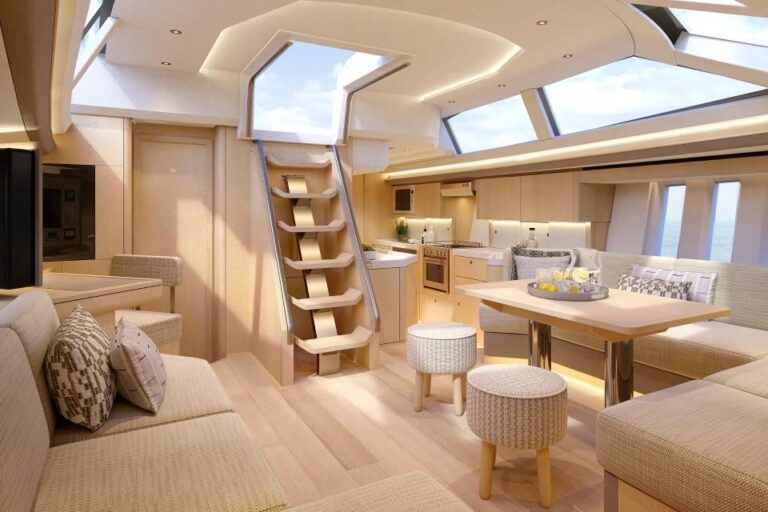
- Marine and yacht interiors
- Furniture and cabinets
- Interior doors
- Stone backing panels
- Commercial and industrial applications
What Is an Aluminum Composite Panel (ACP)?

An aluminum composite panel, commonly known as ACP, is another type of sandwich panel.
Instead of an aluminum honeycomb core, ACP normally consists of two thin aluminum sheets bonded to a continuous core material.
ACP panels are widely used for architectural decoration, signage, building facades, shop interiors, and wall cladding.
The internal core structure is therefore one of the biggest differences between ACP and aluminum honeycomb panels.
Aluminum Honeycomb Panel vs ACP: Key Differences
| Feature | Aluminum Honeycomb Panel | Aluminum Composite Panel |
|---|---|---|
| Core Structure | Aluminum honeycomb core | Continuous composite/mineral core |
| Structural Rigidity | High | Moderate |
| Stiffness-to-Weight Ratio | Excellent | Good |
| Thickness Options | Wide range | Commonly thinner |
| Large Panel Stability | Excellent | Suitable for many decorative applications |
| Customization | Highly customizable | Many standard finishes available |
| Typical Uses | RV, marine, furniture, ceilings, walls, doors, industrial panels | Facades, signage, decoration, wall cladding |
1. Core Structure
The biggest difference between the two panels is inside.
Aluminum honeycomb panels use a cellular aluminum core. The hexagonal structure distributes loads across the panel while reducing the amount of material required inside.
ACP uses a continuous core between two aluminum sheets.
Because of these different structures, their mechanical properties and suitable applications are also different.
2. Rigidity and Structural Performance
One of the main advantages of aluminum honeycomb panels is their high rigidity relative to weight.
The sandwich construction separates the two outer skins using a honeycomb core. This helps increase bending stiffness without requiring a heavy solid material inside the panel.
This makes aluminum honeycomb panels particularly suitable when a project requires:
- Large panel dimensions
- Good flatness
- High rigidity
- Lightweight construction
- Reduced structural weight
ACP provides sufficient performance for many decorative applications, while honeycomb panels are often considered for applications where greater rigidity or thicker structural panels are required.
3. Weight
Both materials can provide lightweight alternatives to traditional materials.
However, the honeycomb structure offers an excellent stiffness-to-weight ratio because much of the internal volume consists of empty space surrounded by thin aluminum cell walls.
This characteristic is particularly valuable for:
- RVs
- Camper vans
- Commercial vehicles
- Yachts
- Marine interiors
- Mobile cabins
- Lightweight furniture
For transportation applications, reducing the weight of walls, cabinets, doors, floors, and furniture can help reduce the overall weight of the vehicle or vessel.
4. Panel Thickness
ACP is commonly supplied in relatively thin panel configurations.
Aluminum honeycomb panels can be manufactured in a wider range of thicknesses according to project requirements.
The appropriate thickness depends on factors such as:
- Panel dimensions
- Required rigidity
- Surface material
- Supporting structure
- Expected load
- Application
- Installation method
This makes aluminum honeycomb panels particularly suitable for customized projects.
5. Large-Format Panel Performance
Large panels can experience problems such as bending, deformation, or insufficient flatness.
The sandwich structure of an aluminum honeycomb panel provides good rigidity while maintaining relatively low weight.
For this reason, honeycomb panels are frequently considered for:
- Large ceiling panels
- Interior wall systems
- Commercial partitions
- Elevator interiors
- Large cabinet doors
- Vehicle wall panels
6. Surface Finish Options
Aluminum honeycomb panels can be combined with a wide variety of surface materials and finishes.
Depending on the application, options can include:
- Painted aluminum
- PVDF coating
- Powder coating
- Anodized aluminum
- PVC decorative surfaces
- SPC decorative surfaces
- Wood-grain finishes
- Stone-look finishes
- Leather finishes
- Stainless steel
- Natural stone veneer
This allows manufacturers and designers to combine structural performance with different decorative requirements.
7. Fire Performance
Fire performance should be evaluated based on the complete panel construction rather than only the product name.
Different ACP products can use different core materials.
Aluminum honeycomb panels use an aluminum cellular core, but the fire performance of the complete panel can also depend on the surface material, coating, adhesive, and other components.
For projects with specific fire requirements, buyers should confirm the relevant test reports, certifications, panel construction, and local regulations before selecting a product.
8. Moisture and Corrosion Resistance
Aluminum does not absorb water like many wood-based materials.
With appropriate aluminum alloys, coatings, adhesives, and edge treatments, aluminum honeycomb panels can be used in humid environments.
Typical applications include:
- Bathroom cabinets
- Kitchen cabinets
- Coastal homes
- Yacht interiors
- Marine furniture
- RV interiors
This can make aluminum honeycomb panels an alternative to plywood, MDF, and other wood-based materials in applications where moisture resistance is important.
9. Cost
ACP is generally an economical option for many standard decorative and cladding applications.
Aluminum honeycomb panels may have a higher initial material cost because of their sandwich construction and manufacturing process.
However, buyers should not compare materials based only on the panel price.
Other factors should also be considered, including:
- Required rigidity
- Panel dimensions
- Supporting frame requirements
- Transportation weight
- Installation requirements
- Expected service environment
- Durability
- Maintenance
- Custom fabrication
For applications where lightweight construction and high rigidity are important, aluminum honeycomb panels may provide better overall project value.
When Should You Choose ACP?
ACP may be suitable when:
- The application is mainly decorative
- A relatively thin panel is required
- Standard architectural cladding is needed
- Cost is a major consideration
- High structural rigidity is not the primary requirement
When Should You Choose Aluminum Honeycomb Panels?
Aluminum honeycomb panels are particularly suitable when your project requires:
- Lightweight construction
- High rigidity
- Large panel dimensions
- Good dimensional stability
- Custom thickness
- Custom surface finishes
- Transportation applications
- Marine applications
- Furniture or cabinet manufacturing
- Ceiling and wall systems
- Specialized industrial panels
The final choice should always depend on the actual engineering and performance requirements of the project.
Common Applications of Aluminum Honeycomb Panels

Architecture
Aluminum honeycomb panels can be used for wall systems, ceilings, partitions, doors, and other architectural elements.
RV and Camper Manufacturing
Lightweight honeycomb panels can be used for RV walls, floors, cabinets, tables, doors, and interior furniture.
Truck and Commercial Vehicles
Reducing panel weight can help manufacturers develop lighter vehicle bodies and interior structures.
Yacht and Marine Interiors
Aluminum honeycomb panels can be used for lightweight marine furniture, partitions, cabinets, doors, and interior structures.
Furniture and Cabinets
Honeycomb panels can be used to manufacture lightweight cabinet doors, wardrobes, shelves, tables, kitchen cabinets, and bathroom cabinets.
Stone Composite Panels
Thin natural stone can be bonded to an aluminum honeycomb backing to produce lightweight stone composite panels for architectural applications.
Custom Aluminum Honeycomb Panels from Meiren Aluminum
Foshan Meiren Aluminum Co., Ltd. manufactures customized aluminum honeycomb panels for B2B projects.
Our aluminum honeycomb solutions are used in architecture, furniture, RVs, commercial vehicles, marine interiors, doors, ceilings, cabinets, and decorative applications.
Depending on your project requirements, we can customize:
- Panel dimensions
- Panel thickness
- Aluminum skin thickness
- Honeycomb core specifications
- Surface material
- Decorative finish
- Edge treatment
- Fabrication requirements
If you are comparing aluminum honeycomb panels with ACP or other lightweight panel materials, send us your application, dimensions, thickness requirements, and expected quantity.
Our team can help you determine a suitable panel structure for your project.
Frequently Asked Questions
Is aluminum honeycomb panel the same as ACP?
No. Aluminum honeycomb panels use a cellular aluminum honeycomb core, while ACP normally uses a continuous composite or mineral-filled core.
Which is stronger, aluminum honeycomb panel or ACP?
It depends on panel thickness, skin thickness, core specification, dimensions, and support conditions. For applications requiring a high stiffness-to-weight ratio and thicker sandwich construction, aluminum honeycomb panels can provide significant advantages.
Is aluminum honeycomb panel lighter than ACP?
Not necessarily in every direct comparison. Panel weight depends on thickness, aluminum skins, core density, and other materials. The main advantage of honeycomb construction is its ability to achieve high rigidity at relatively low weight.
Can aluminum honeycomb panels be customized?
Yes. Dimensions, thickness, aluminum skins, honeycomb cores, surface materials, finishes, and fabrication can all be customized according to project requirements.
Which panel should I choose for my project?
ACP is widely used for decorative and cladding applications, while aluminum honeycomb panels are particularly suitable for projects requiring lightweight construction, rigidity, large dimensions, or specialized customization.
For B2B projects, provide your manufacturer with the application, dimensions, required thickness, quantity, and performance requirements before confirming the final panel structure.