


Aluminum Honeycomb Panels vs Plywood for Truck and Trailer Bodies
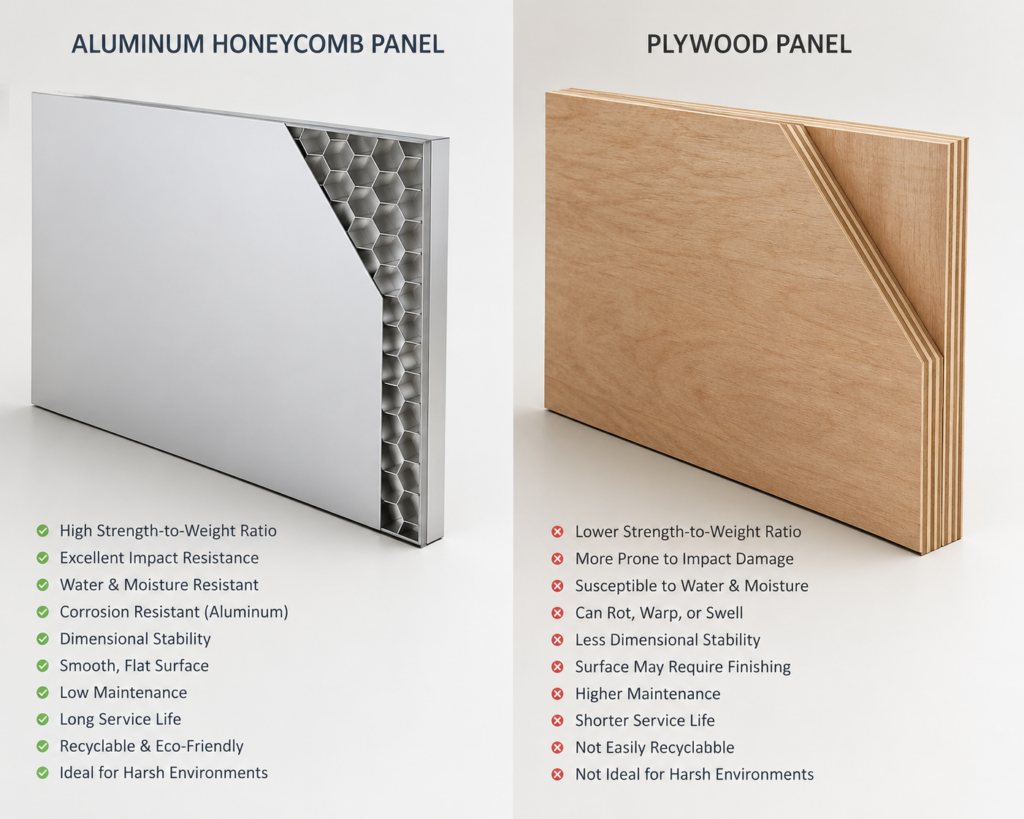
Aluminum honeycomb panels vs plywood is an important comparison for truck body manufacturers, trailer factories, RV builders and vehicle modification companies.
Both materials can be used for vehicle walls, floors, compartments and furniture structures. However, they perform very differently in weight, waterproof performance, strength, durability and long-term maintenance.
For manufacturers trying to build lighter and more durable vehicle bodies, understanding these differences can help them select the right panel material.
Aluminum Honeycomb Panels vs Plywood: Quick Comparison
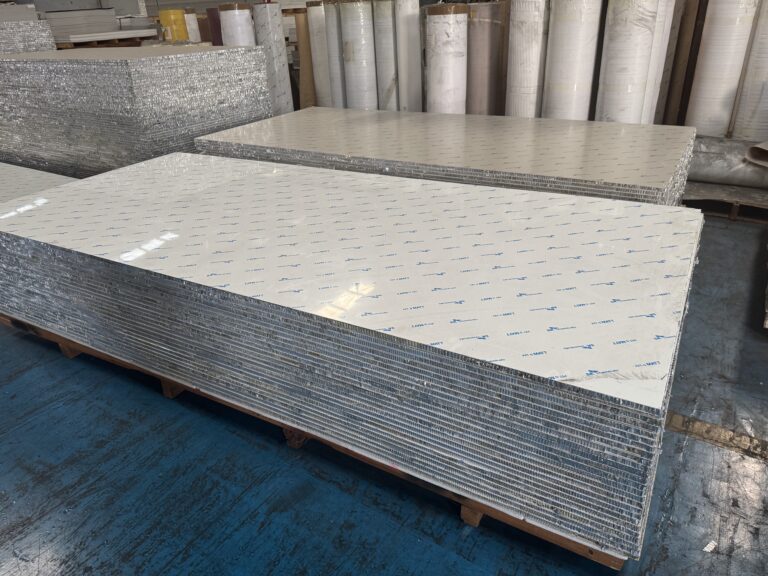
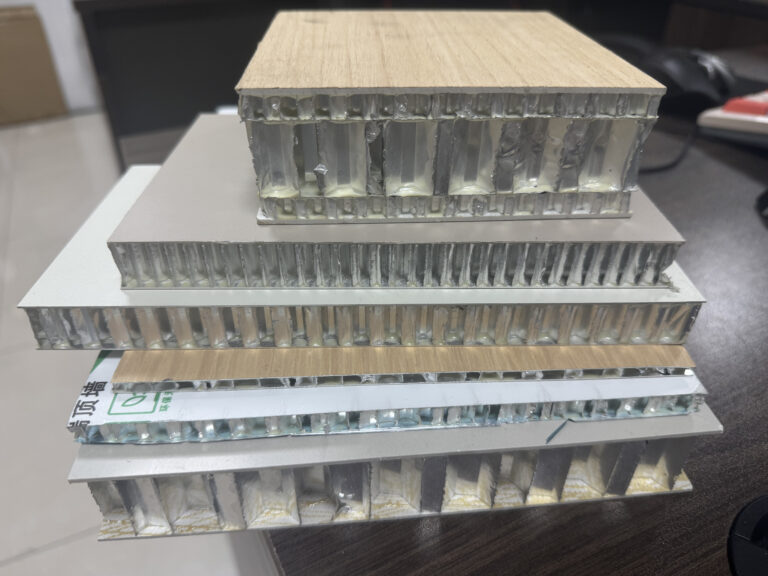
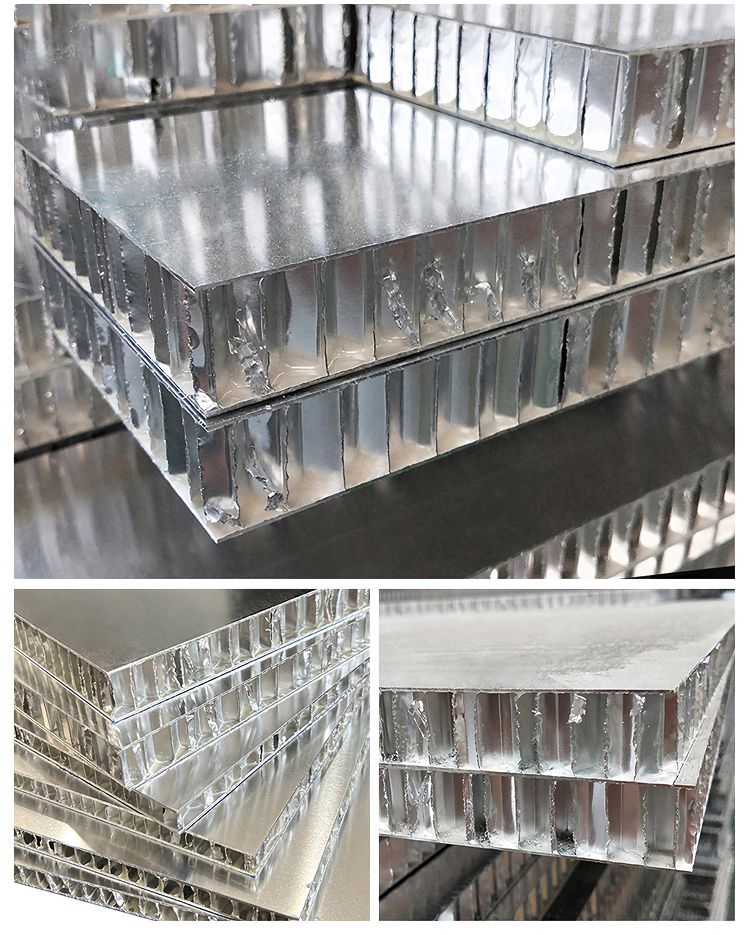
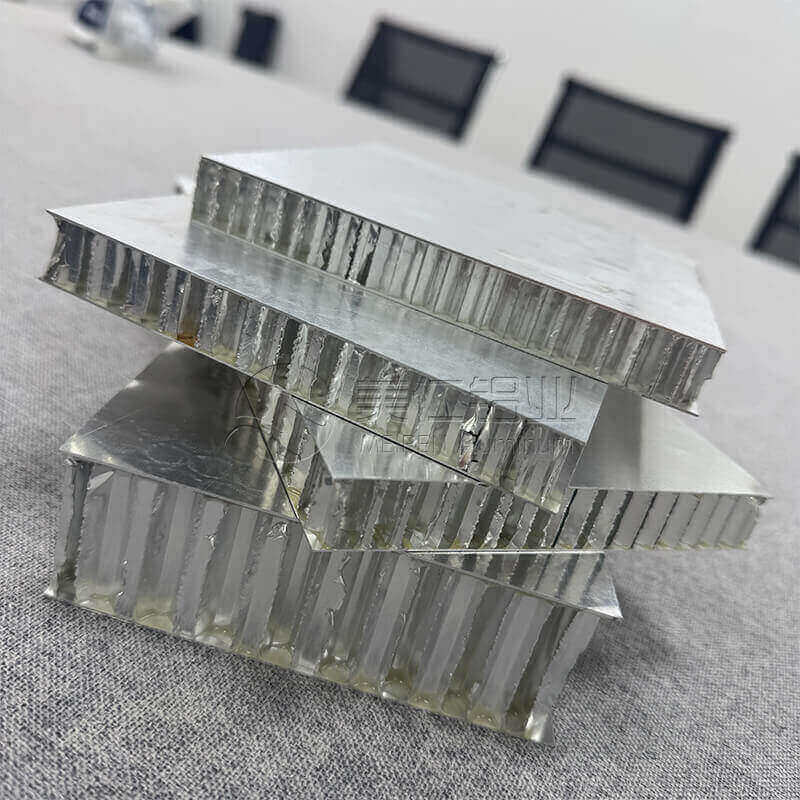
Aluminum honeycomb panels are lightweight composite panels made with aluminum skins and an aluminum honeycomb core.
Plywood is a wood-based panel made by bonding multiple layers of wood veneer together.
The main differences are:
- Aluminum honeycomb panels are lighter
- Aluminum honeycomb panels have better moisture resistance
- Plywood is usually easier to source locally
- Plywood normally has a lower initial material cost
- Aluminum honeycomb panels provide better long-term stability
- Plywood may swell, warp or become moldy after water exposure
- Aluminum honeycomb panels are more suitable for premium lightweight vehicle projects
The best choice depends on the vehicle type, required service life, budget and operating environment.
Weight Comparison
Weight is one of the most important differences between aluminum honeycomb panels and plywood.
Plywood is a solid wood-based material. As panel thickness and size increase, its weight also increases significantly.
Aluminum honeycomb panels use a lightweight cellular core. This structure allows the panel to maintain good rigidity without using a heavy solid core.
Reducing panel weight can help:
- Improve fuel efficiency
- Increase payload capacity
- Reduce suspension pressure
- Improve vehicle handling
- Increase electric vehicle driving range
- Reduce the total weight of trailers and campers
For lightweight vehicle body systems, aluminum honeycomb panels usually provide a better strength-to-weight ratio.
Why Aluminum Honeycomb Panels Are Lightweight and Strong
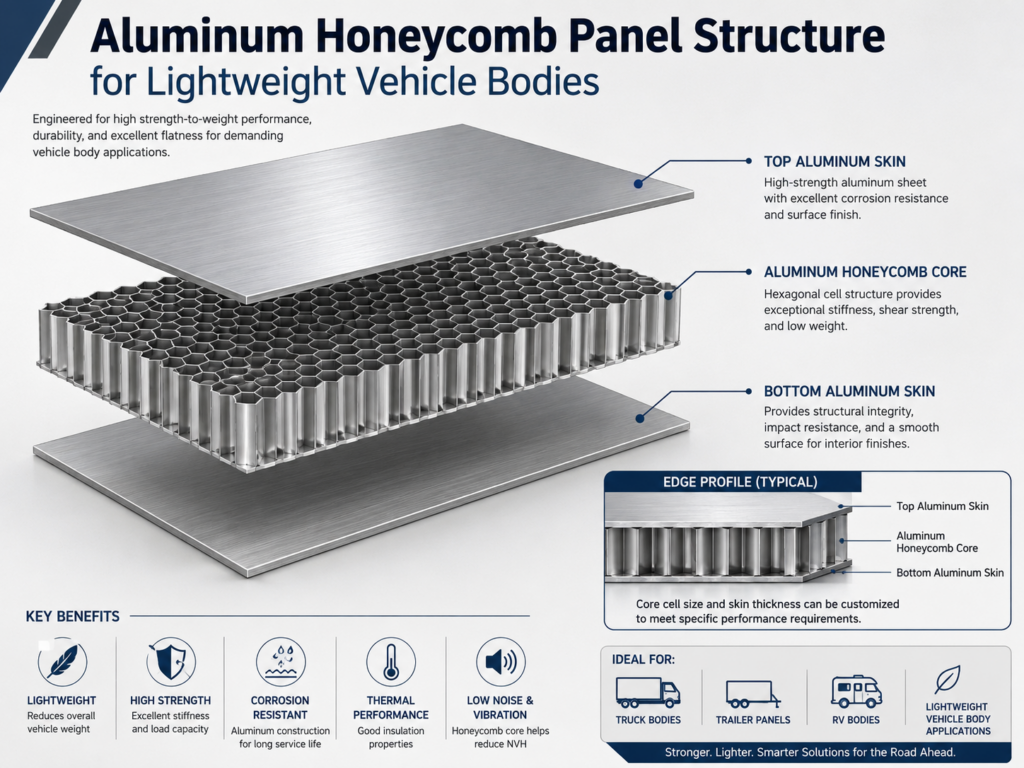
The honeycomb core distributes loads across the panel structure.
The aluminum skins provide the outer surface, while the internal honeycomb core helps resist bending and deformation.
This construction gives the panel:
- Good stiffness
- Stable flatness
- Low overall weight
- Better resistance to bending
- Suitability for large panel sizes
These characteristics make aluminum honeycomb panels suitable for truck side panels, trailer walls, RV bodies, camper shells and utility vehicle compartments.
Waterproof and Moisture Resistance
Plywood can perform well when it remains dry and properly sealed. However, long-term moisture exposure can create problems.
Possible plywood problems include:
- Water absorption
- Swelling
- Edge expansion
- Mold
- Delamination
- Warping
- Loss of surface quality
Truck bodies, trailers, RVs and campers are frequently exposed to rain, humidity, mud and temperature changes.
Aluminum honeycomb panels do not absorb water like wood-based panels. This makes them more suitable for applications where moisture resistance and long-term stability are important.
Outdoor Durability
Vehicle body panels may face difficult outdoor conditions, including:
- Strong sunlight
- Rain
- Snow
- Road vibration
- Mud and sand
- Temperature changes
- Coastal humidity
- Salt spray
Plywood requires good sealing and regular protection to reduce moisture damage.
Aluminum honeycomb panels can provide better stability in outdoor and humid environments. The final durability also depends on aluminum alloy, skin thickness, coating, adhesive quality, edge sealing and installation method.
For coastal vehicles, campers and outdoor trailers, proper material selection and edge treatment are especially important.
Strength and Rigidity
Plywood has good screw-holding ability and can be suitable for many interior applications.
However, large plywood panels may be heavy and can bend or deform after long-term moisture exposure.
Aluminum honeycomb panels provide high rigidity with lower weight. This makes them suitable for larger vehicle body panels where flatness and dimensional stability are important.
The exact panel specification should be selected according to:
- Panel size
- Required load
- Support spacing
- Aluminum skin thickness
- Honeycomb core size
- Final installation structure
Aluminum honeycomb panels should not automatically replace structural steel parts. They are most suitable where lightweight panel construction is required.
Processing and Installation
Plywood is easy to cut and process with common woodworking tools.
It can also hold screws directly in many applications, which is one reason it remains widely used.
Aluminum honeycomb panels can also be:
- Cut
- Drilled
- CNC processed
- Edge banded
- Bonded
- Installed with aluminum profiles
- Combined with embedded parts
- Fitted with hardware
However, hardware fixing areas may require reinforcement, aluminum inserts or embedded components.
For vehicle manufacturers, the panel design should be confirmed before production so that fixing points, edges and connection methods can be prepared correctly.
Cost Comparison
Plywood usually has a lower initial purchase cost.
For projects focused only on the lowest upfront material price, plywood may appear more economical.
However, the total cost should also consider:
- Vehicle weight
- Fuel consumption
- Payload capacity
- Water damage
- Panel replacement
- Maintenance
- Service life
- Customer positioning
Aluminum honeycomb panels generally cost more initially, but they may provide better long-term value for high-end, lightweight and moisture-resistant vehicle projects.
The most suitable material is not always the cheapest panel. It is the material that meets the final performance requirements with acceptable total cost.
Where Are These Panels Used?
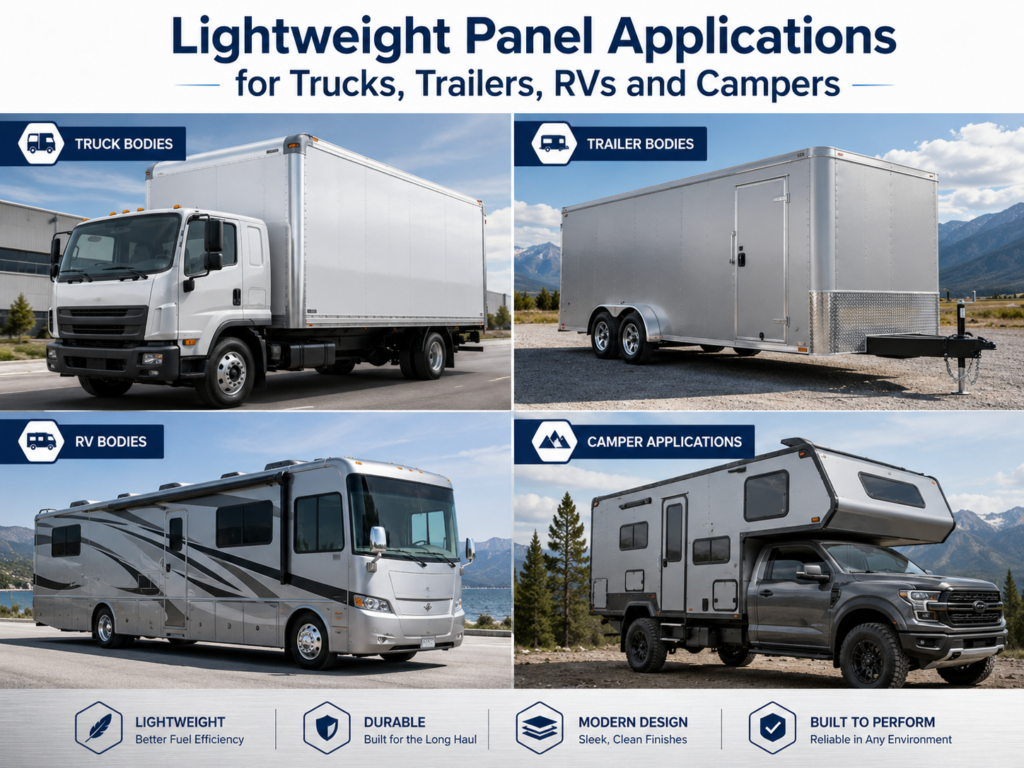
Aluminum honeycomb panels and plywood may both be considered for:
- Pickup truck bed systems
- Pickup truck canopies
- Utility truck boxes
- Cargo trailer walls
- Box truck compartments
- RV body panels
- Camper body panels
- Expedition vehicles
- Overland campers
- Vehicle furniture
- Interior partitions
- Vehicle flooring systems
Plywood may remain suitable for dry interior parts and price-sensitive projects.
Aluminum honeycomb panels are usually more suitable for lightweight, waterproof, premium and long-service-life applications.
Which Material Is Better for Truck Bodies?
There is no single answer for every project.
Choose Plywood When:
- Initial cost is the main priority
- The application is dry and protected
- Common woodworking is required
- Direct screw fixing is important
- Weight is not a major concern
Choose Aluminum Honeycomb Panels When:
- Weight reduction is important
- Waterproof performance is required
- The vehicle is used outdoors
- Long-term dimensional stability matters
- Large panels need good rigidity
- The project targets a premium market
- The vehicle is an EV, RV, camper or lightweight trailer
For many modern vehicle body applications, aluminum honeycomb panels offer stronger long-term performance advantages.
Customization and Processing Options
As an aluminum honeycomb panel manufacturer, we can support customized solutions for truck, trailer, RV and commercial vehicle projects.
Available options include:
- Customized panel thickness
- Customized panel dimensions
- Bare aluminum surfaces
- Coated aluminum surfaces
- Different aluminum skin thicknesses
- CNC cutting
- Aluminum edge processing
- Embedded reinforcement
- Hardware preparation
- Small-batch customization
- Bulk production
Common panel sizes include 1220 × 2440 mm and 1220 × 2750 mm. Larger or non-standard sizes may also be produced according to project requirements.
Before recommending a specification, we normally need to understand the final application, panel dimensions, load requirements, fixing method and surface requirements.
Conclusion
Aluminum honeycomb panels vs plywood is not only a comparison of purchase price.
Plywood remains useful for many dry, interior and cost-sensitive applications. Aluminum honeycomb panels provide stronger advantages in lightweight construction, moisture resistance, rigidity and long-term outdoor stability.
For truck bodies, trailers, RVs, campers, utility vehicles and electric delivery vehicles, aluminum honeycomb panels can be a practical alternative when weight reduction and durability are important.
Related Vehicle Body Panel Solution
Learn more about our complete vehicle body panel solution:
Aluminum Honeycomb Panels for Truck Bodies and Utility Vehicles